What this form is for
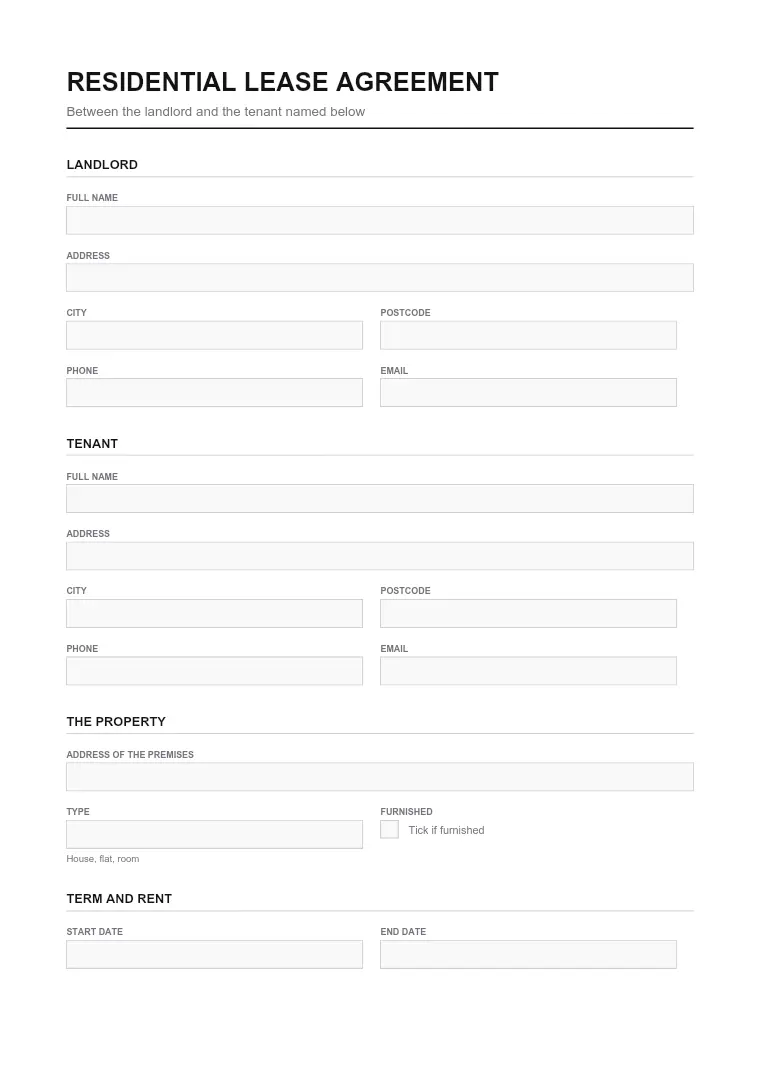
Residential Lease Agreement. Sets out who is renting what, for how long, at what rent, and on what terms.
Who needs it
A landlord and a tenant, before the tenant moves in.
Before you start
Have these to hand — stopping halfway to look one of them up is how a ten-minute job becomes an evening.
- The full legal names of everyone who will live there
- The exact address including any unit number
- Rent, due date, deposit and late-fee terms
- Which utilities each side pays
How to fill it in
Open the file in the Quire editor. Existing form fields become editable straight away; on a flat scan you can drop your own text boxes, checkboxes and dates exactly where they belong. Sign it with the Sign tool — draw, type or upload your signature — then export.
Everything happens in your browser. A signed agreement carries enough personal information that it has no business sitting on somebody else's server, and here it never does.
What goes wrong
- Deposits are the most regulated part of a tenancy: how much may be taken, where it must be held, and how quickly it must be returned are all set by state law, and a clause that contradicts it is unenforceable.
- Many states require specific disclosures — lead paint for pre-1978 housing is a federal one.
- Everyone over 18 who lives there should sign, or you cannot hold them to it.
Where it goes
Each party keeps a signed copy. Deeds and some notices must additionally be filed with the county recorder to be effective.
This page explains the document and helps you fill it in. It is not legal or tax advice, and it is not affiliated with any government agency.