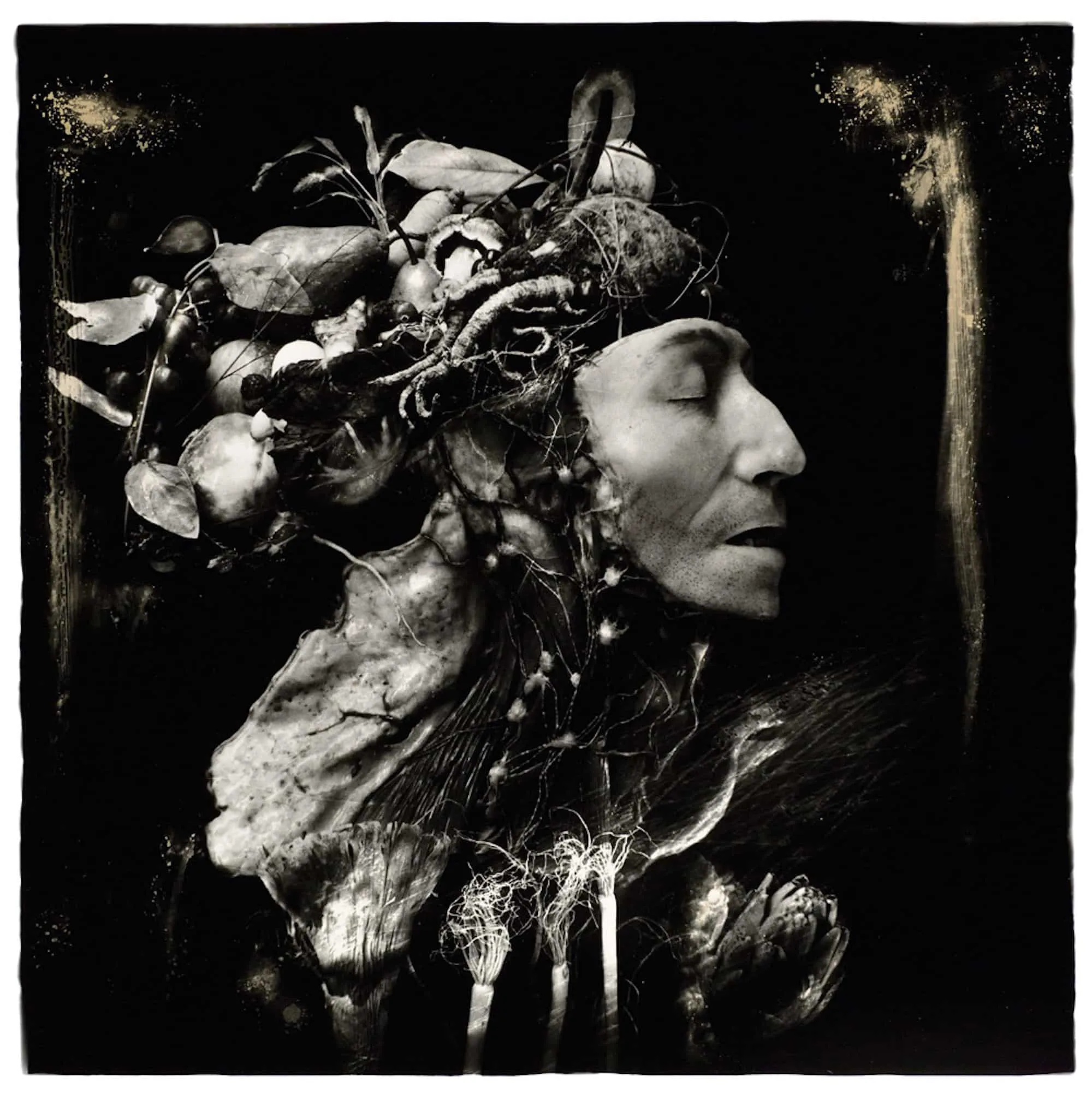
He damages the print so you can look at it
Joel-Peter Witkin stages what nobody wants to see, then scratches, pierces and bleaches the negative until the photograph looks a hundred years old. The damage is what makes it bearable.
- Subject
- New Mexico, Tableau, The body
Joel-Peter Witkin was born in Brooklyn in 1939, photographed for the United States Army in the early 1960s, where the job included documenting accidental deaths, and has worked out of New Mexico for most of his life since. He tells a story about a car crash outside a church when he was very small, and a child's head coming to rest near his feet. Whether that is where it began is not checkable. It is where he says it began.
What he makes are tableaux, built and lit in a studio like seventeenth-century paintings, which several of them openly are. The cast is drawn from people with physical differences who sit by arrangement, and, in a number of the best known pictures, from human remains. Much of that work was made in Mexico, because that was where access to anatomical material was possible. This is the part of the description most writing about him hurries past, and it should not be hurried past, because the rest only makes sense next to it.
Then he attacks the picture. The negative is scratched and pierced, the print is made through tissue, the paper is bleached and toned by hand, until what comes out looks like a damaged plate from the 1880s that somebody found in a drawer. He traces the idea to an old ambrotype in which a woman had scraped her former lover out of the frame.
And that is the mechanism, which the shock usually stops people from reaching. A clean, sharp, modern print of the same scene would be unlookable and probably unpublishable. Aged, scratched and foxed, the same scene arrives as something already historical, already survived, already filed under the past. The damage is not a style. It is the permission slip.
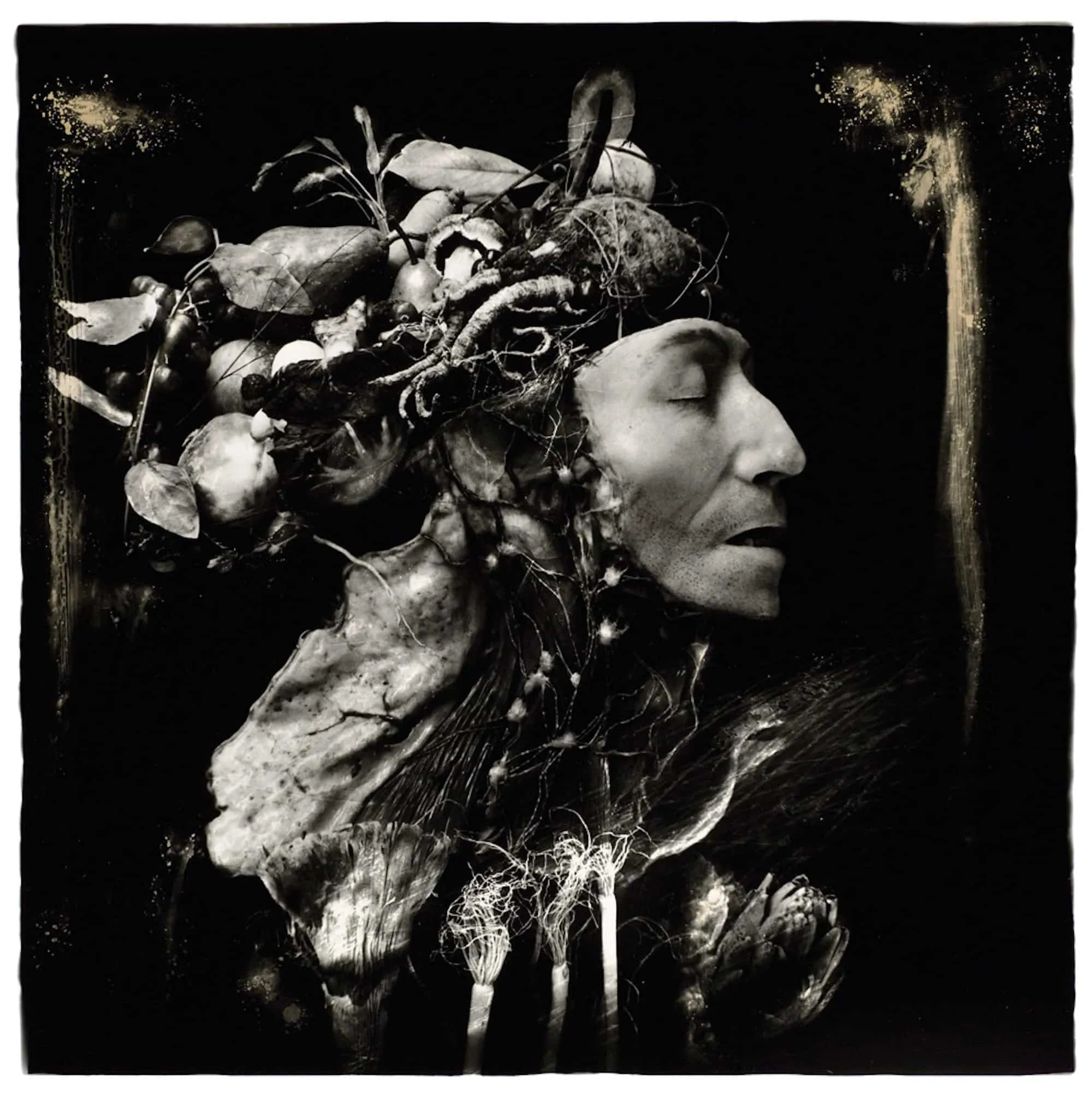
The finished print. A head crowned with branches and roots, bleached, scratched and toned by hand until it reads as a plate from the 1880s rather than a photograph taken this decade. 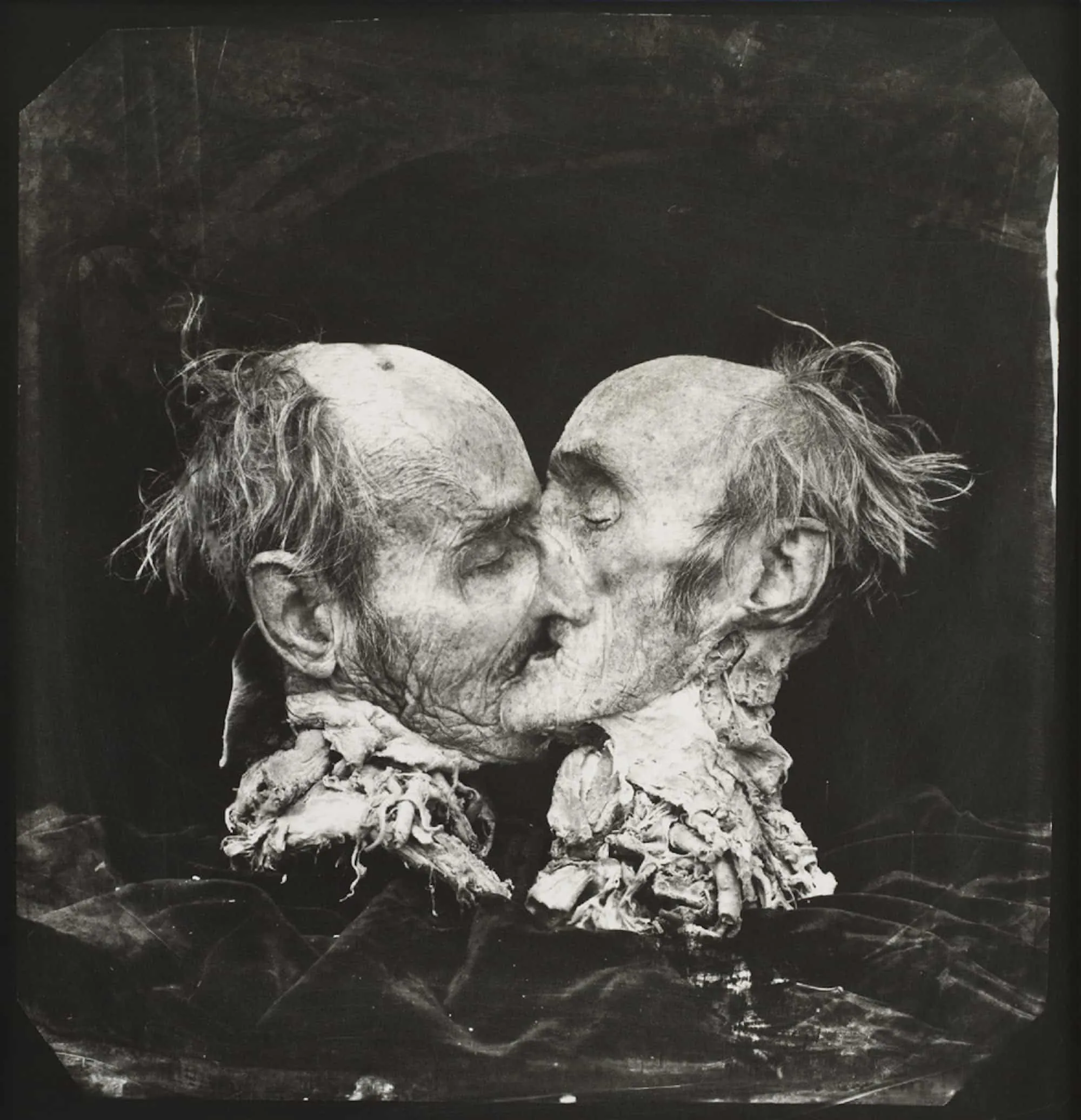
Le Baiser (The Kiss), 1982. One head, divided, with the two halves placed to face each other. The picture that explains the method fastest. 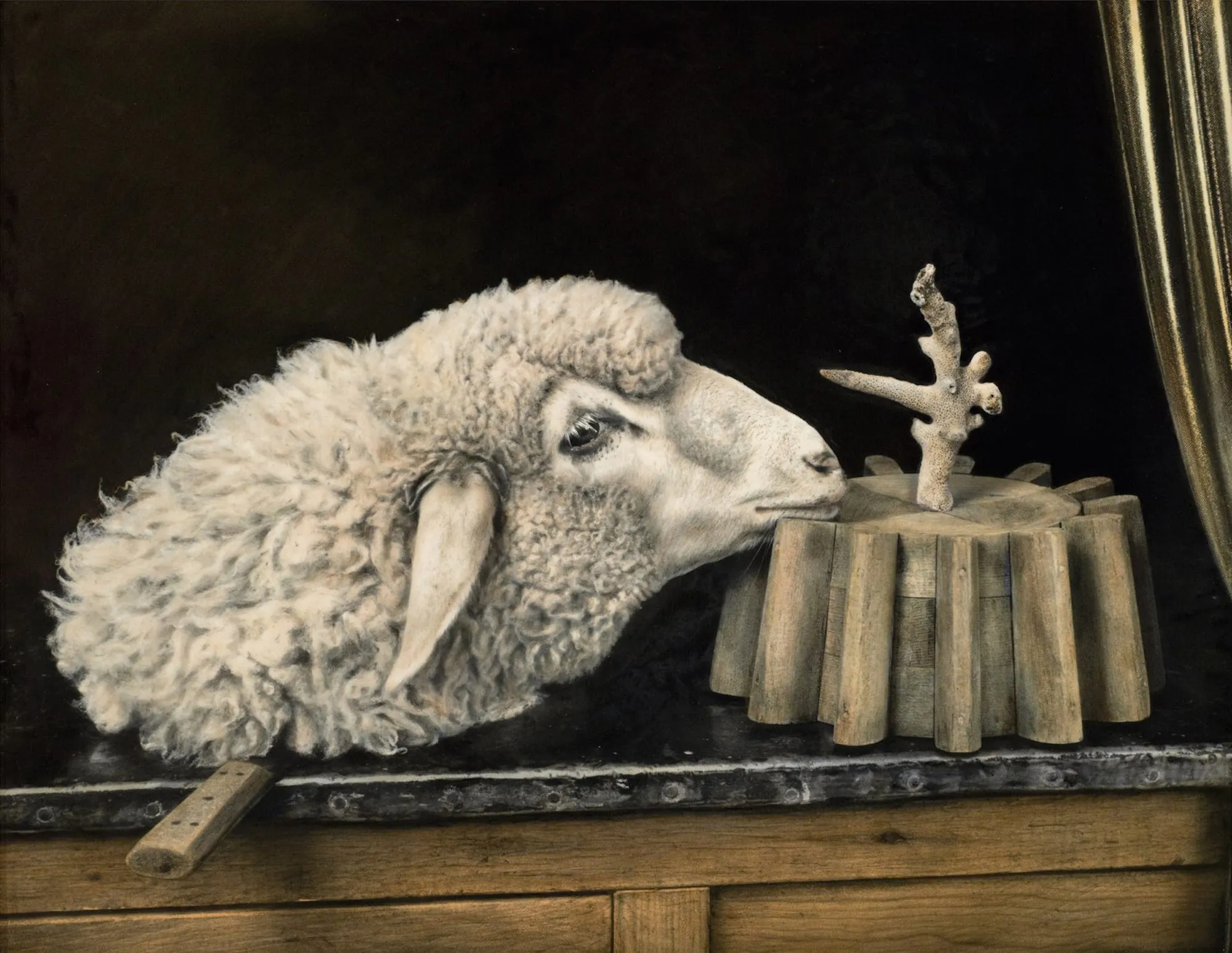
A still life built on a table top, in the manner of the Dutch seventeenth century. The memento mori is not a figure of speech here. 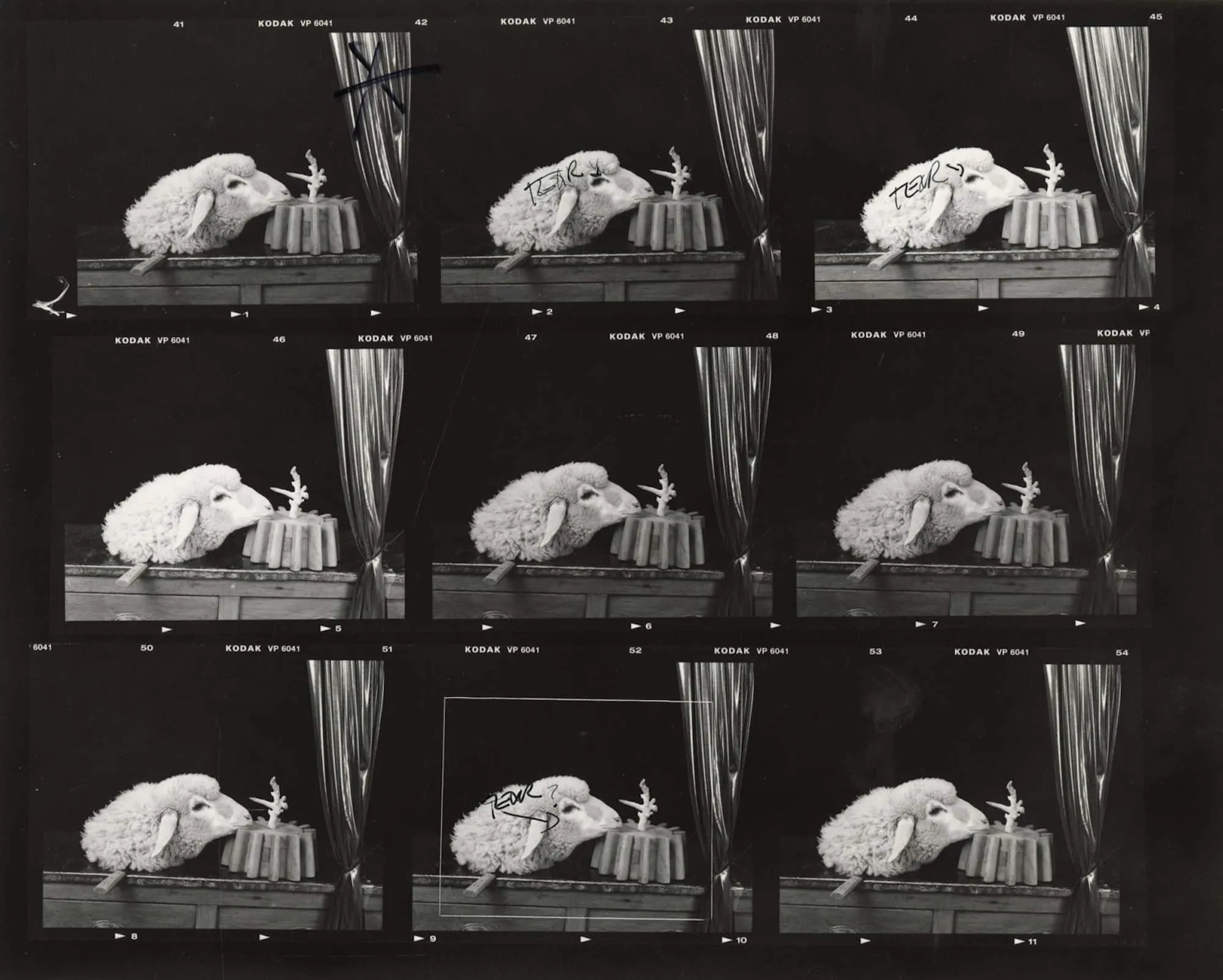
A contact sheet. The tableau is lit and shot over and over, and the choosing is done afterwards in pencil, on the sheet. 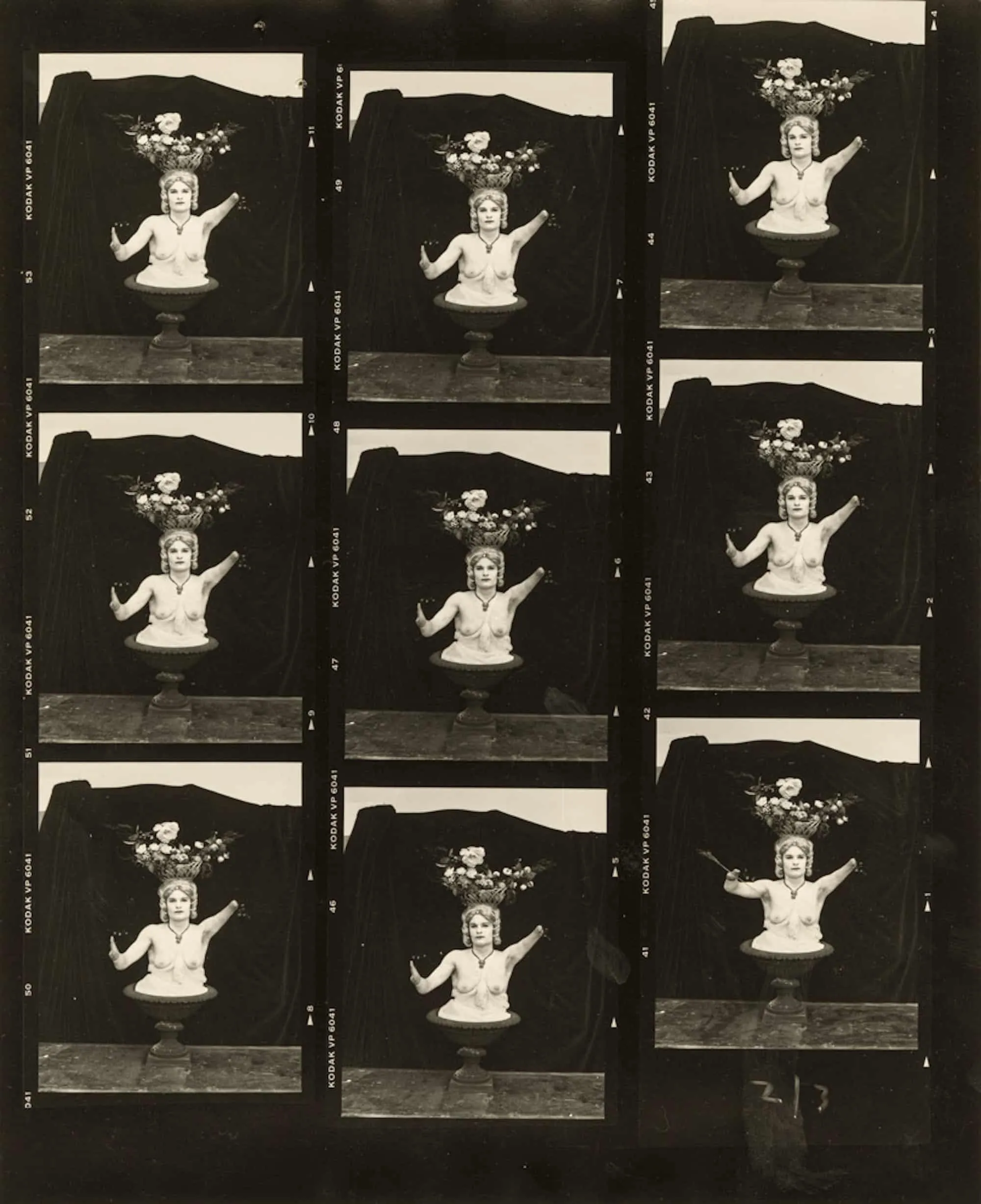
Another sheet, nine frames of one arrangement. The work is in the staging; the exposure is the easy part. 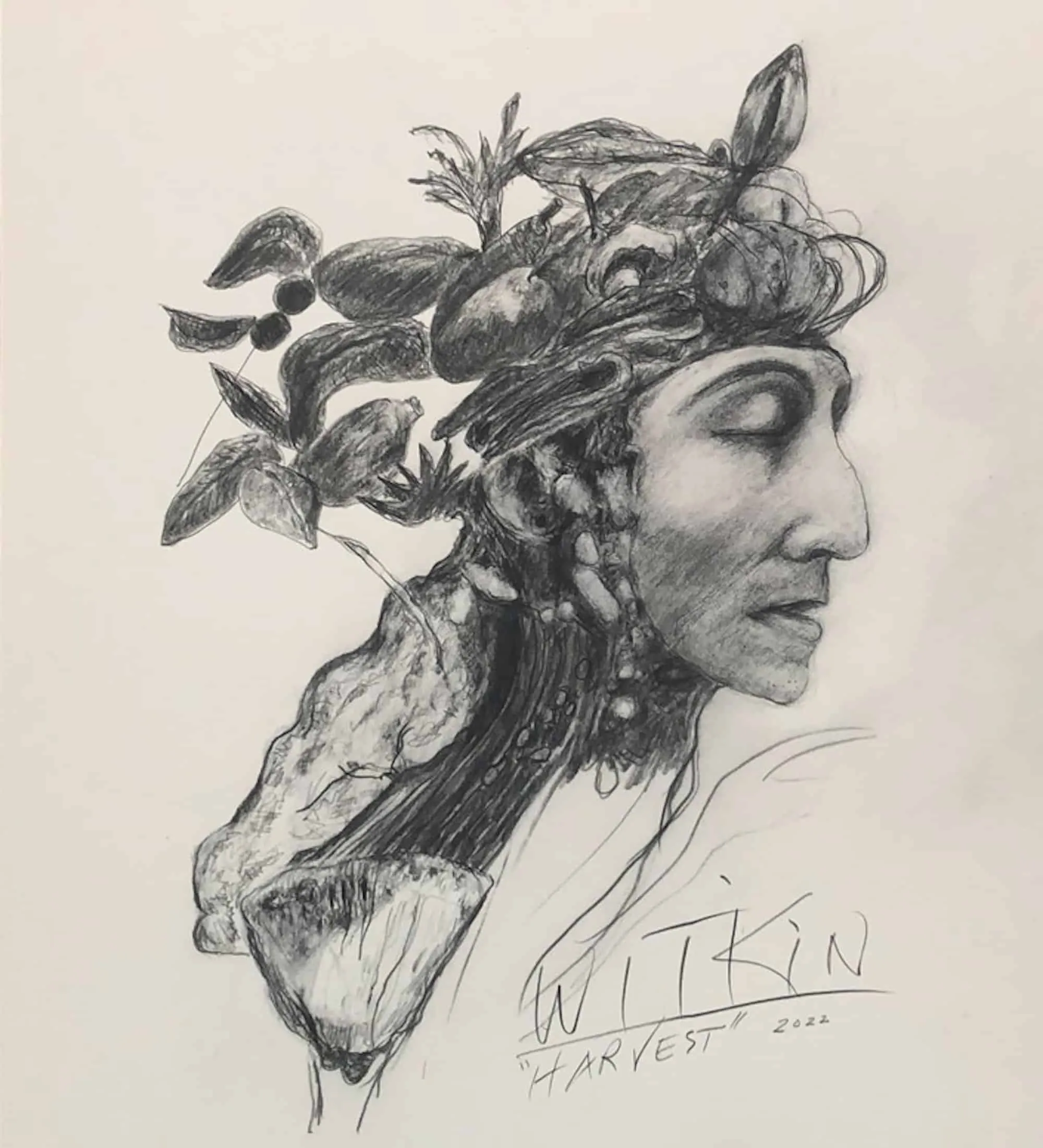
A drawing. Witkin works the picture out on paper before anything is built, so the photograph is the execution of a plan rather than a thing found. 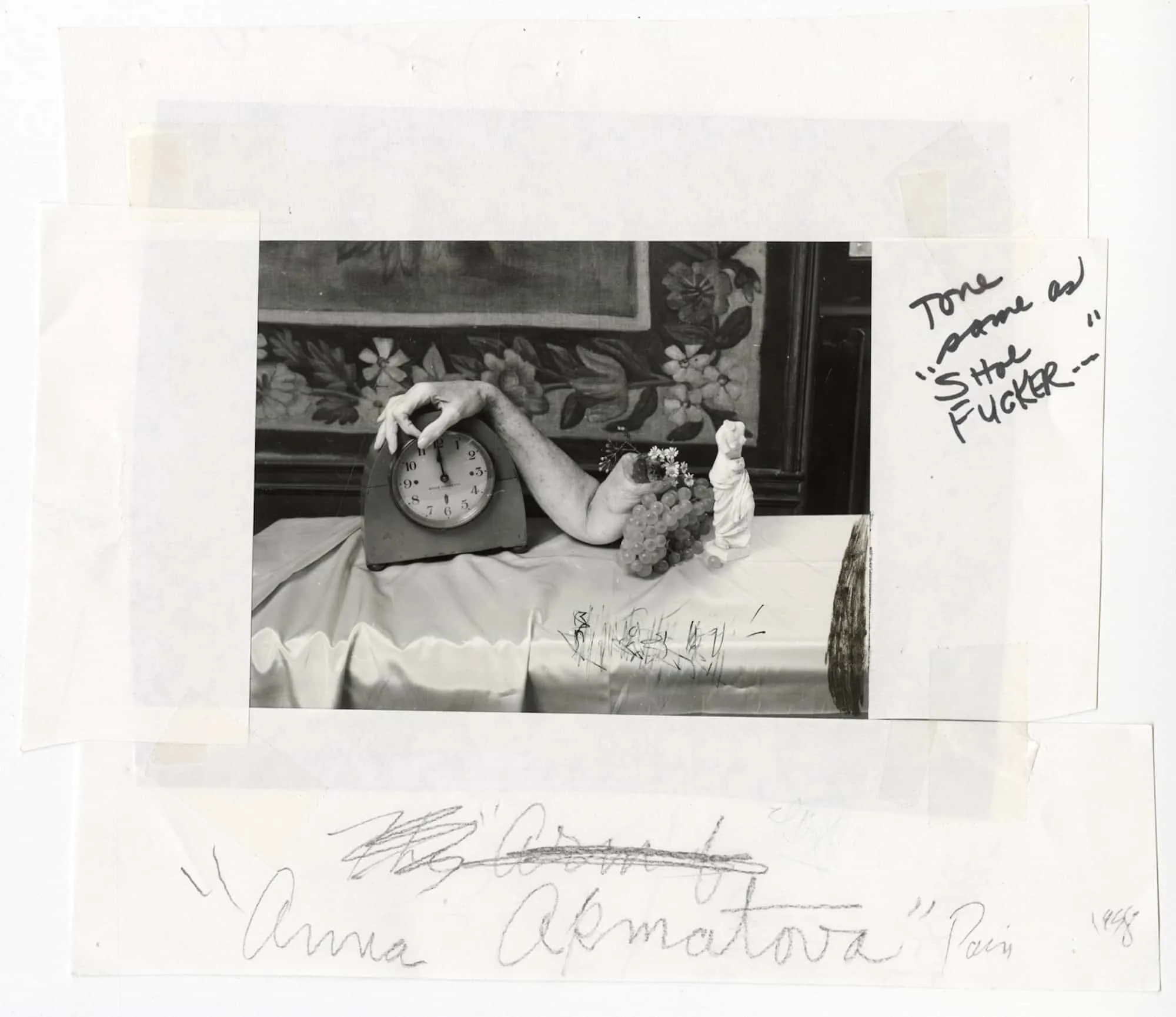
A work print marked up in red, with the printing instructions written straight onto the image. 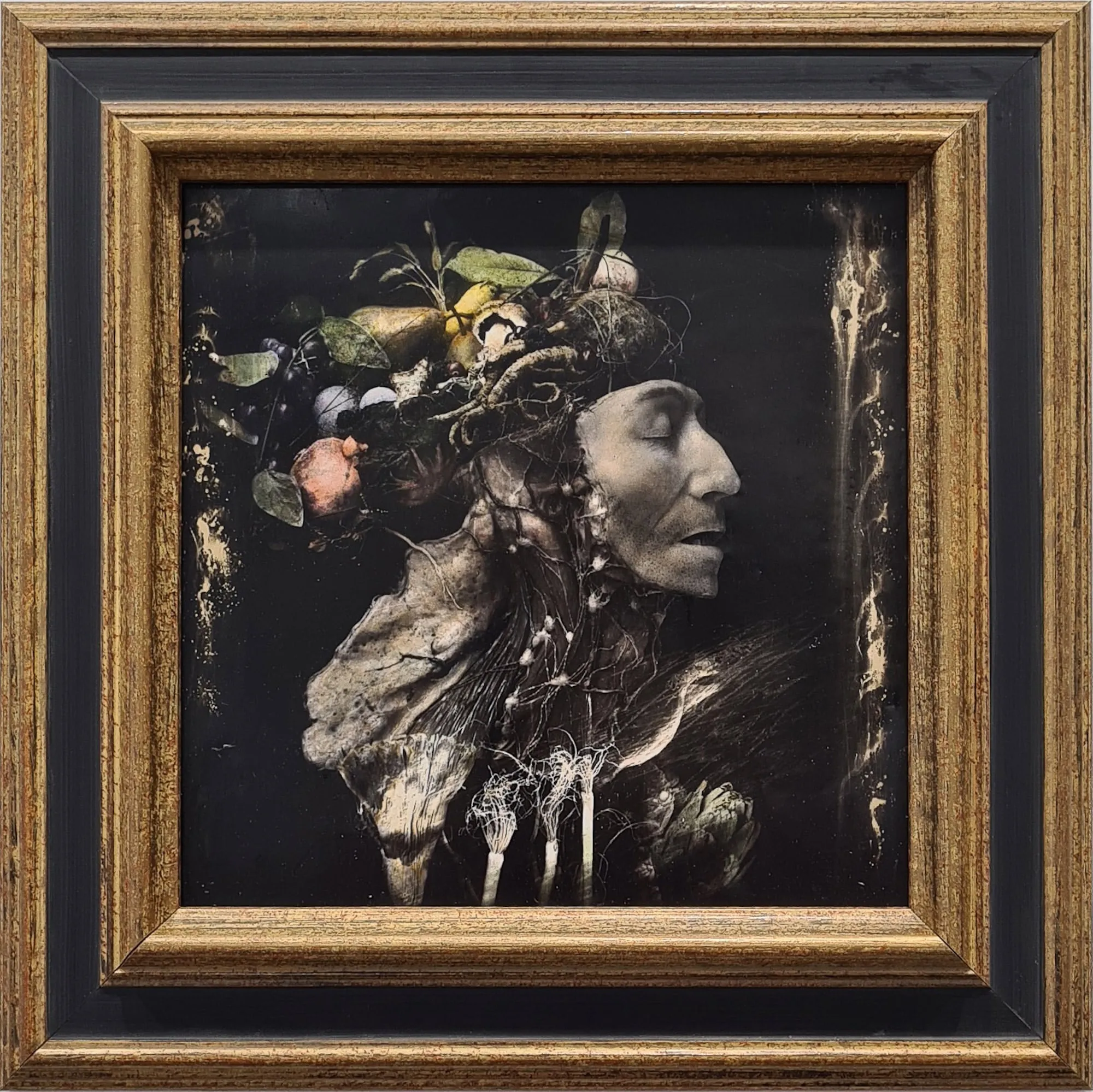
The same picture framed. The surface, foxed and scratched, is the object; the scene is only what the object is a picture of.