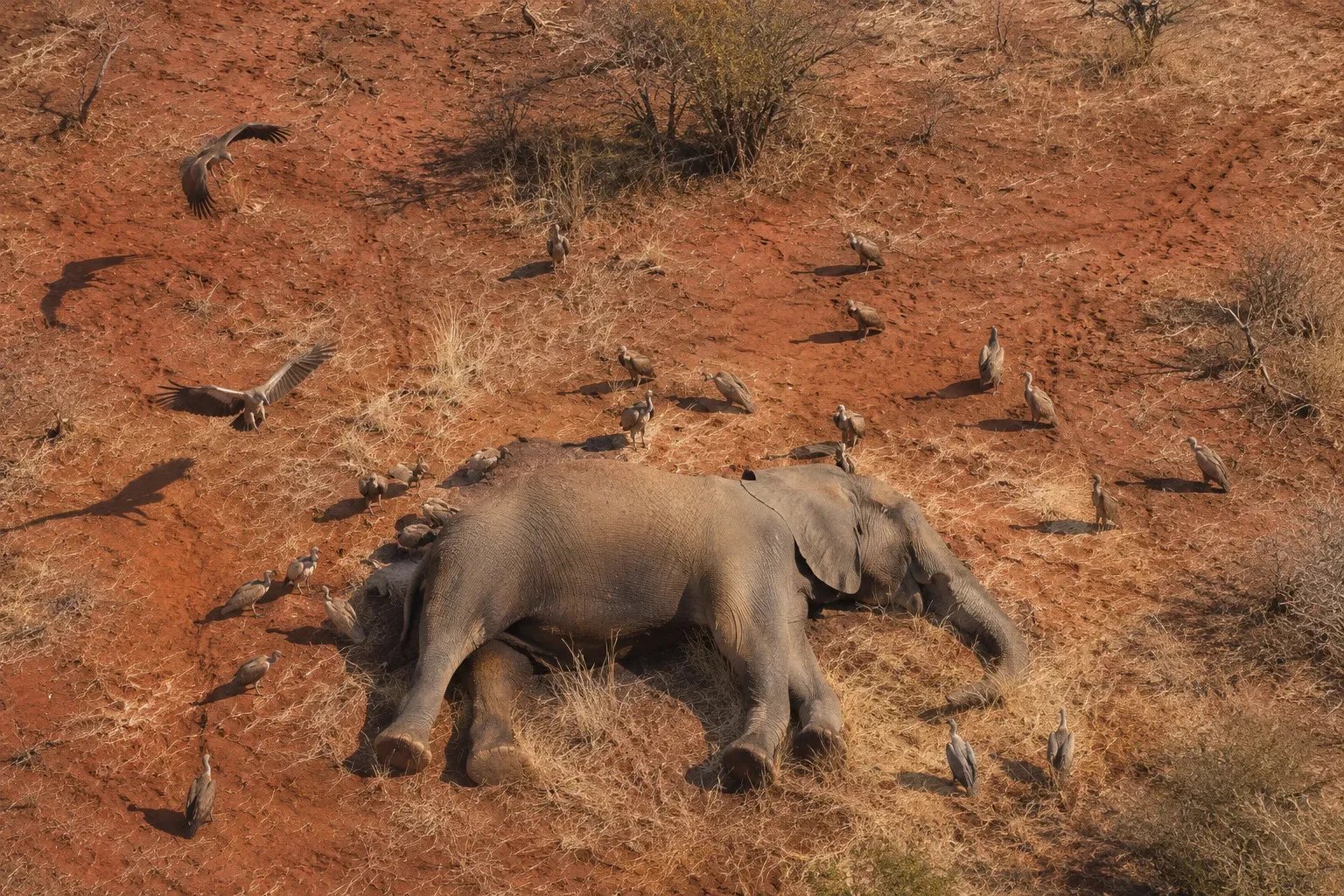
The birds that give it away
Vultures find a poached elephant before any ranger does. That is why poachers poison the carcass, and why most of a continent of vultures is gone.
- Subject
- Poaching, Vultures
A dead elephant is visible from a long way off, and not because of the elephant. Vultures find a carcass within minutes, they come down in numbers, and from the air a spiral of birds over the bush is a legible sign that something large has died. Rangers have always used that. They fly the sign, they find the body, and if the tusks are gone they have a crime scene and a direction to search in.
So the poachers started killing the birds. The method is to lace the carcass with a farm pesticide, usually one of the cheap carbamates sold across the region for crop pests, and leave it. The vultures feed, and the flock that would have marked the kill dies around it instead. In 2013, at one poisoned elephant in Bwabwata in Namibia, around six hundred vultures were found dead at a single carcass. That is not an aberration. It is a tactic, and it is used because it works.
The arithmetic of it is grim and simple. One elephant buys the poachers a week of quiet. A vulture pair raises roughly one chick a year, and not every year. Africa's vultures were already in trouble, and several species are now listed as critically endangered: the continent has lost most of them within a single human career. A bird that clears carrion off the landscape, and in doing so keeps anthrax and rabies from running through livestock, is being wiped out as a side effect of covering tracks.
The elephants themselves are the part of this that got attention. The worst of the killing ran from about 2008 to 2013; the most cited estimate for the peak is around a hundred thousand African elephants in three years, with the illegal share of all elephant deaths at its highest on record. Forest elephants, which breed slowly and were hit hardest, are now judged to have fallen by something near four fifths over about three decades.
It then got better, and for an unglamorous reason. China closed its legal domestic ivory market at the end of 2017, the price of raw ivory fell steeply over the years that followed, and killing elephants stopped being worth as much. Enforcement helped and rangers helped, but the thing that moved the line was demand. The trade is not gone. It moved, it got quieter, and where the state is weak it never paused.
What the picture above does not show is the part that is hardest to count. A herd is run by an old female who knows where the water is in a bad year, and poachers take the largest animals, which means they take her. The herd that survives keeps the dry season route in its memory only as long as somebody in it was already walking that route. Shoot enough of the old ones and the knowledge goes with them, in a landscape where knowing where the water is is the whole of survival.
So the ring of birds is the right picture for this, and not for the obvious reason. They are not standing there as a symbol of death. They are the witnesses, and somebody worked out that witnesses can be poisoned.
Written here, from the published record.