Built for the camera
A protest is shaped by whatever it can broadcast with: the wire services, the television, the meeting, the phone. Each time, the state learns the new medium about a decade late.
- Subject
- Protest, Media, Ninety years
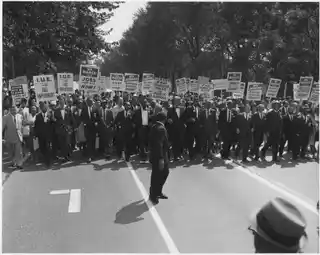
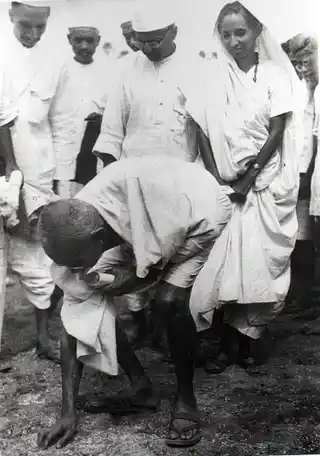
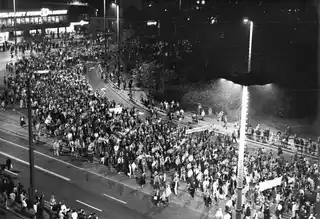
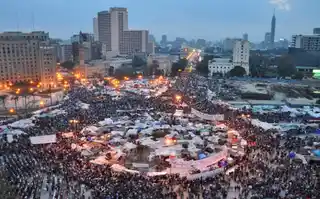
A protest is a technology rather than a mood, and like any technology it is shaped by the equipment available when it is built. The six photographs above are ninety years apart. The people in them are standing in a road, which is the one thing that has not changed, but the thing they are doing is not the same thing, because what each generation could do with the picture of itself was not the same either.
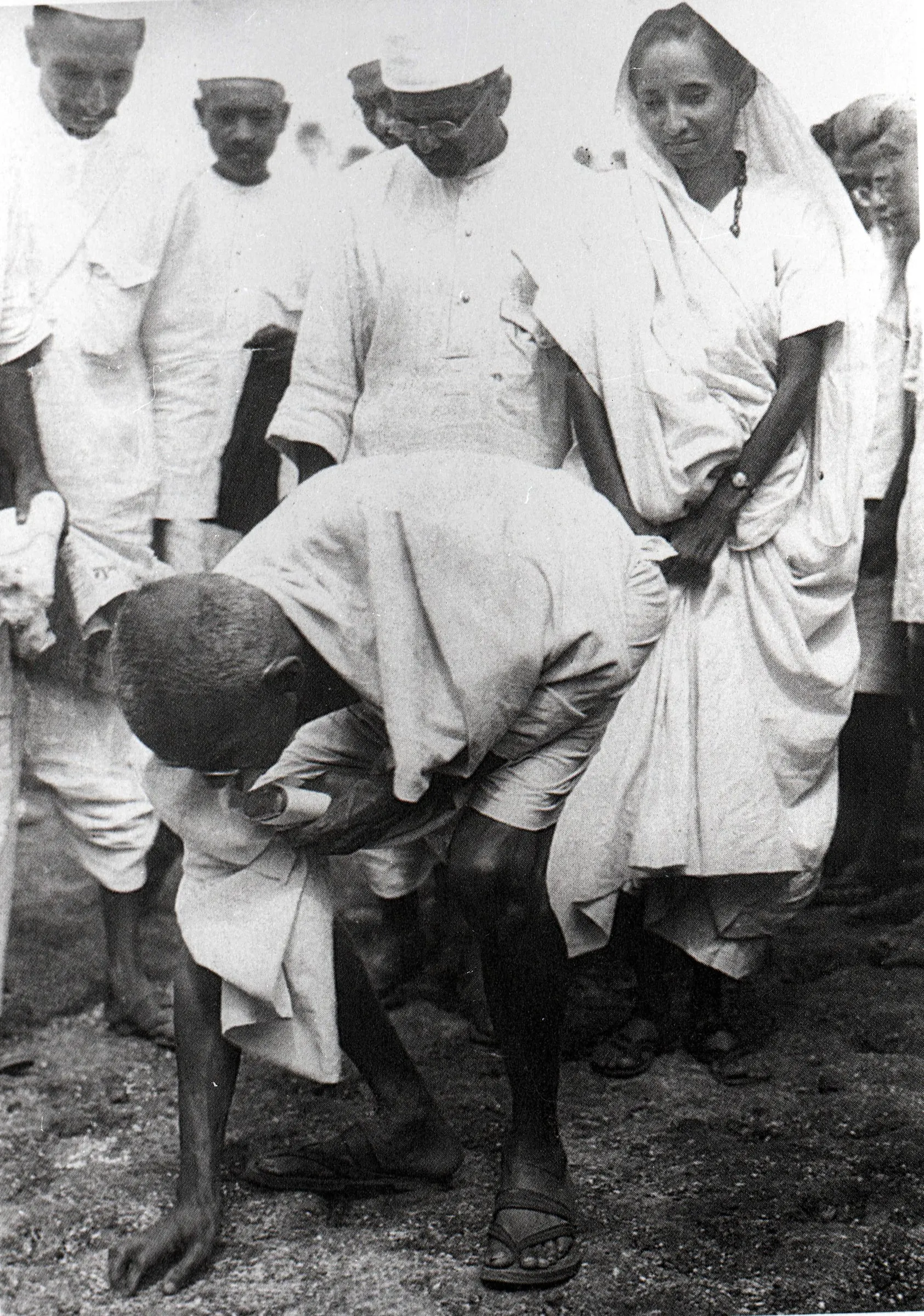
The oldest of them is the clearest case, because it was engineered. In 1930 Gandhi walked about two hundred and forty miles from Sabarmati to the sea in order to pick up a lump of salt, which was illegal, and the walk took twenty-four days because it was supposed to. A fast march reaches the coast. A slow one, with a speech in every village, gives the wire services and the newsreel companies time to send people, to file, and to print, and ends in a single photogenic illegal act that a photograph can carry on its own. Tens of thousands of arrests followed. The audience it was built for was not in India.
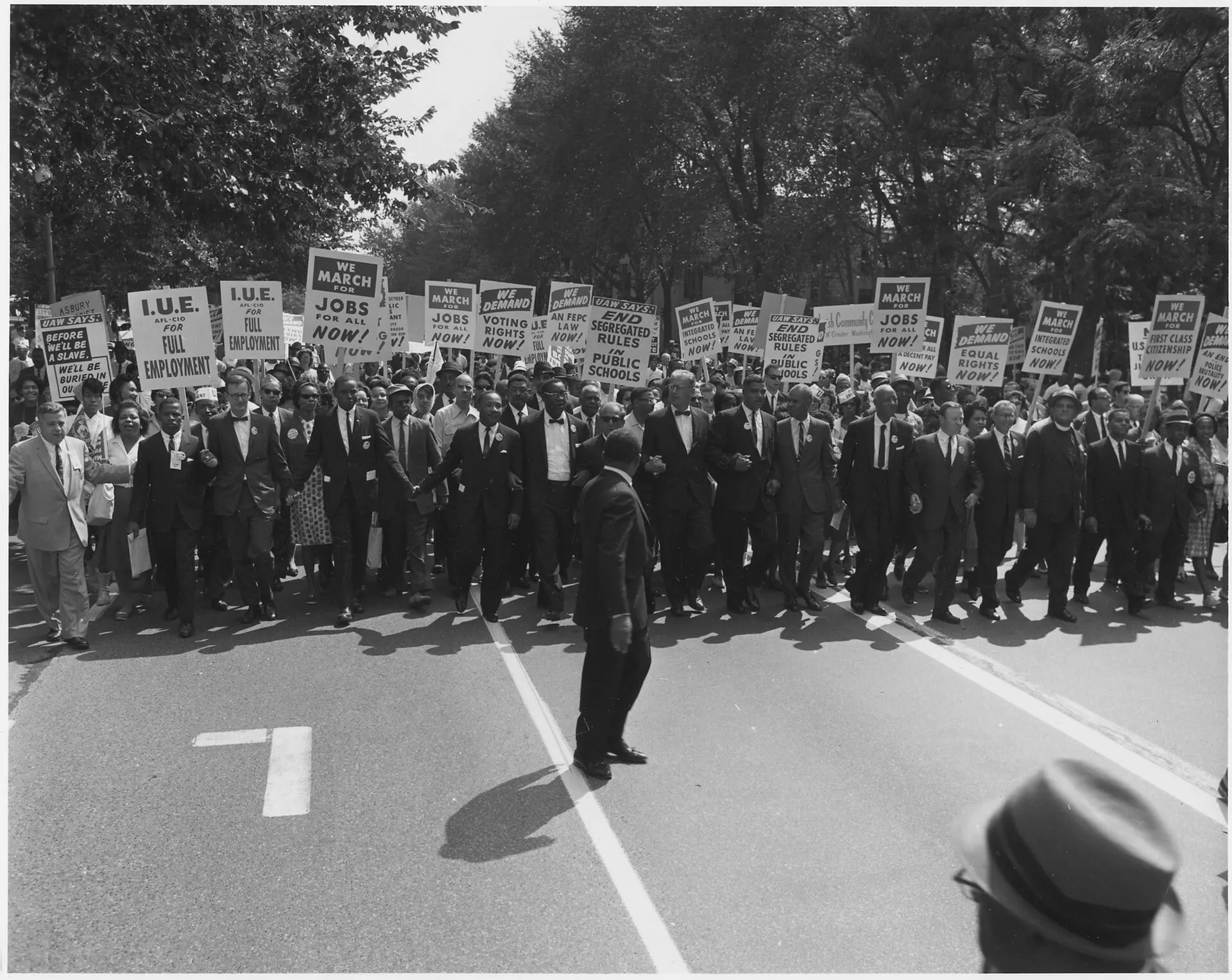
Television changed the unit from the picture to the scene. The American civil rights campaigns of the 1960s were planned on the understanding that the response, not the march, was the message, and that the response had to be filmed to exist. On the evening of 7 March 1965 ABC interrupted its Sunday night film to run footage of the beating at the Edmund Pettus Bridge in Selma, to an audience usually given as around forty-eight million. The Voting Rights Act was signed in August. The method was to arrange for brutality to happen where a camera was pointing, and then to be visibly unarmed while it did.
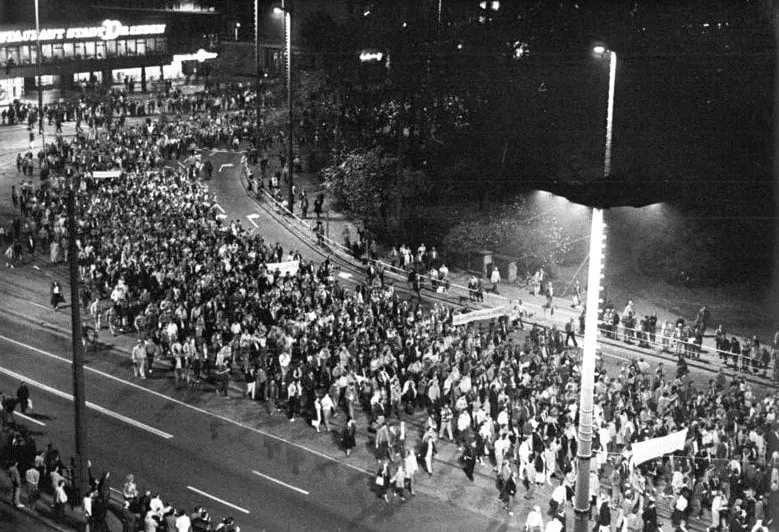
In the Eastern bloc the scarce thing was not courage but duplication, because the state owned the presses and the paper. What spread instead was the meeting: the Monday demonstrations in Leipzig grew out of prayer meetings at the Nikolaikirche from a few hundred people in September 1989 to something near three hundred thousand in late October, organised almost entirely by word of mouth and by showing up at a known place at a known hour. The photograph of it here survives because it was taken by the state's own news agency. The Wall opened seventeen days afterwards.
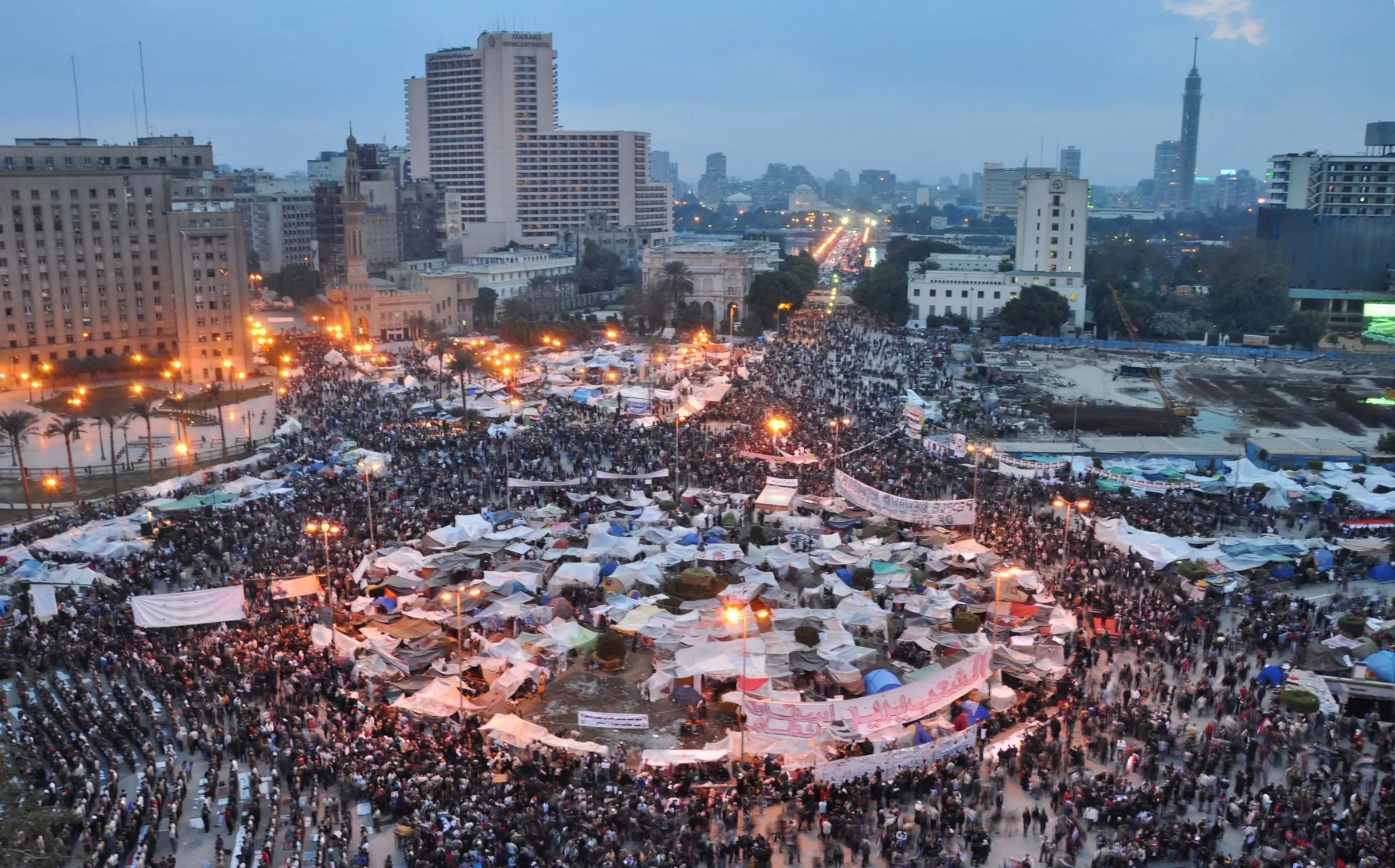
The network era arrived with its own proof. Egypt in January 2011 was coordinated on Facebook and Twitter, which is the part everybody remembers; what is worth remembering instead is what the government did about it. On 28 January it cut the country off the internet almost completely, and kept it off for five days, which remains the first time a state switched off a whole country. The crowds got larger. With nothing to read and nobody to text, the only way to find out what was happening was to go to the square, and people went.
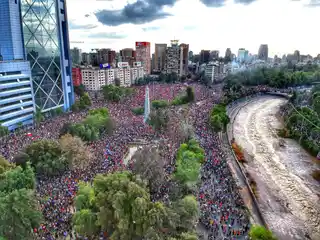
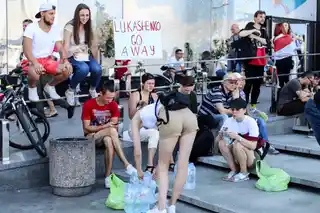
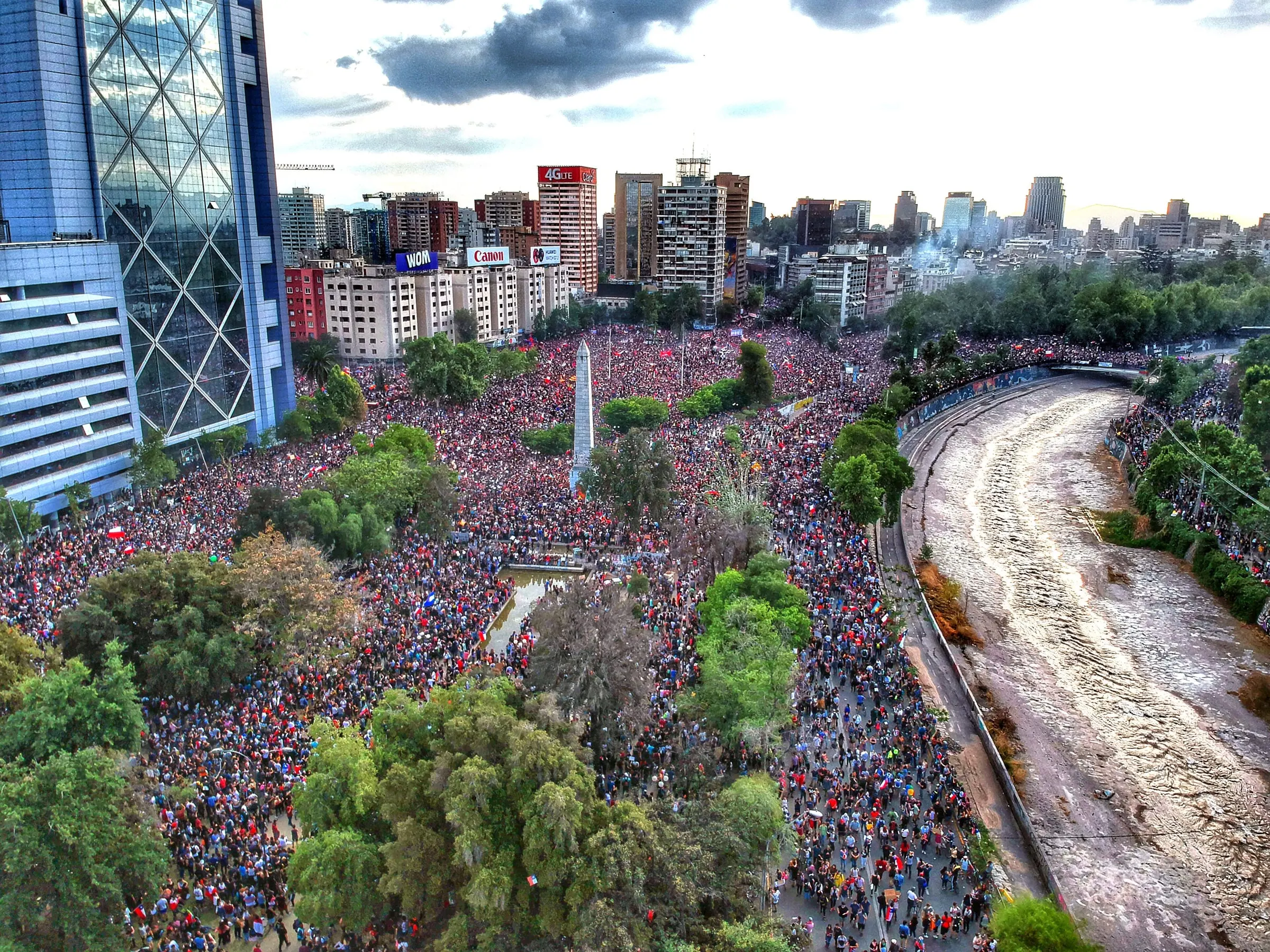
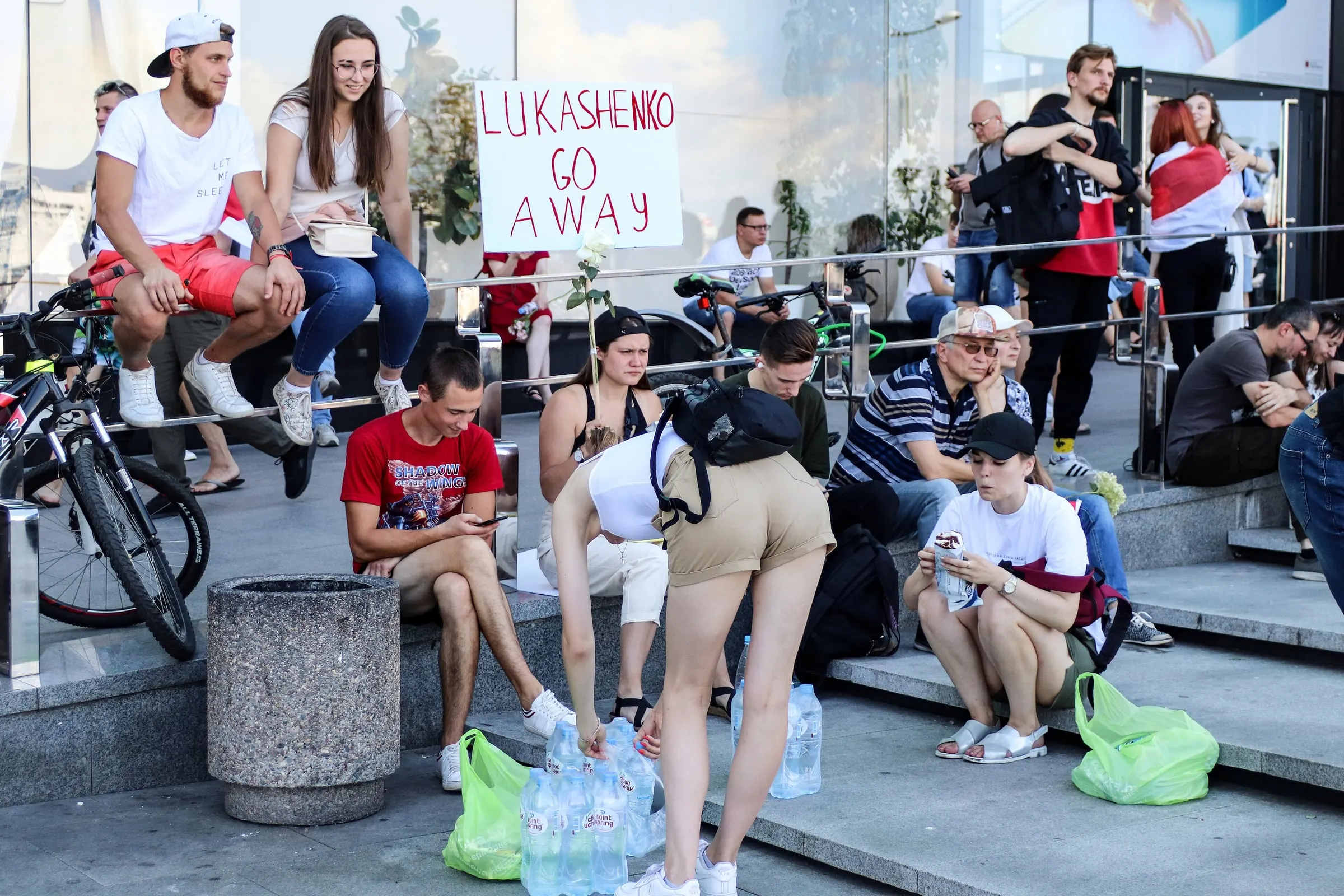
The decade that followed removed the head. Santiago on 25 October 2019 put more than a million people into the streets, the largest march in Chile's history, with no organisation that could have called it off and no leadership to negotiate with. Minsk in August 2020 ran on routes posted to Telegram channels an hour in advance, so there was nothing to raid and nobody to arrest beforehand. The form is very hard to stop and equally hard to settle with: Chile got a referendum and then rejected the constitution it produced, and Belarus got nothing at all.
What runs through all of it is a lag. A new medium belongs to the crowd for roughly a decade before the authorities learn to use it, and then it belongs to both. The tools that now matter most in a protest are not for broadcasting but for not being identified: face coverings against recognition systems, burner handsets against phone extraction, cash tickets against travel records, and against all of that the deliberate internet shutdown, which India has used more than any other country for years. The newest skill is invisibility, which is the exact reverse of the skill Gandhi was using.
And yet the pictures still do the one job none of the technology replaced. Strip out the flags and the decade and every frame above is a photograph of a count: how many people were willing, on one particular afternoon, to stand somewhere they had been told not to stand. Governments dispute the number because the number is the whole argument. Ninety years of changing equipment, and the thing being measured is still the same thing.
Written here, from the published record. The photographs are not ours and they are not all by one person: each one is credited under its own frame, with a link to the page it came from, where its licence is set out. None has been altered beyond resizing.