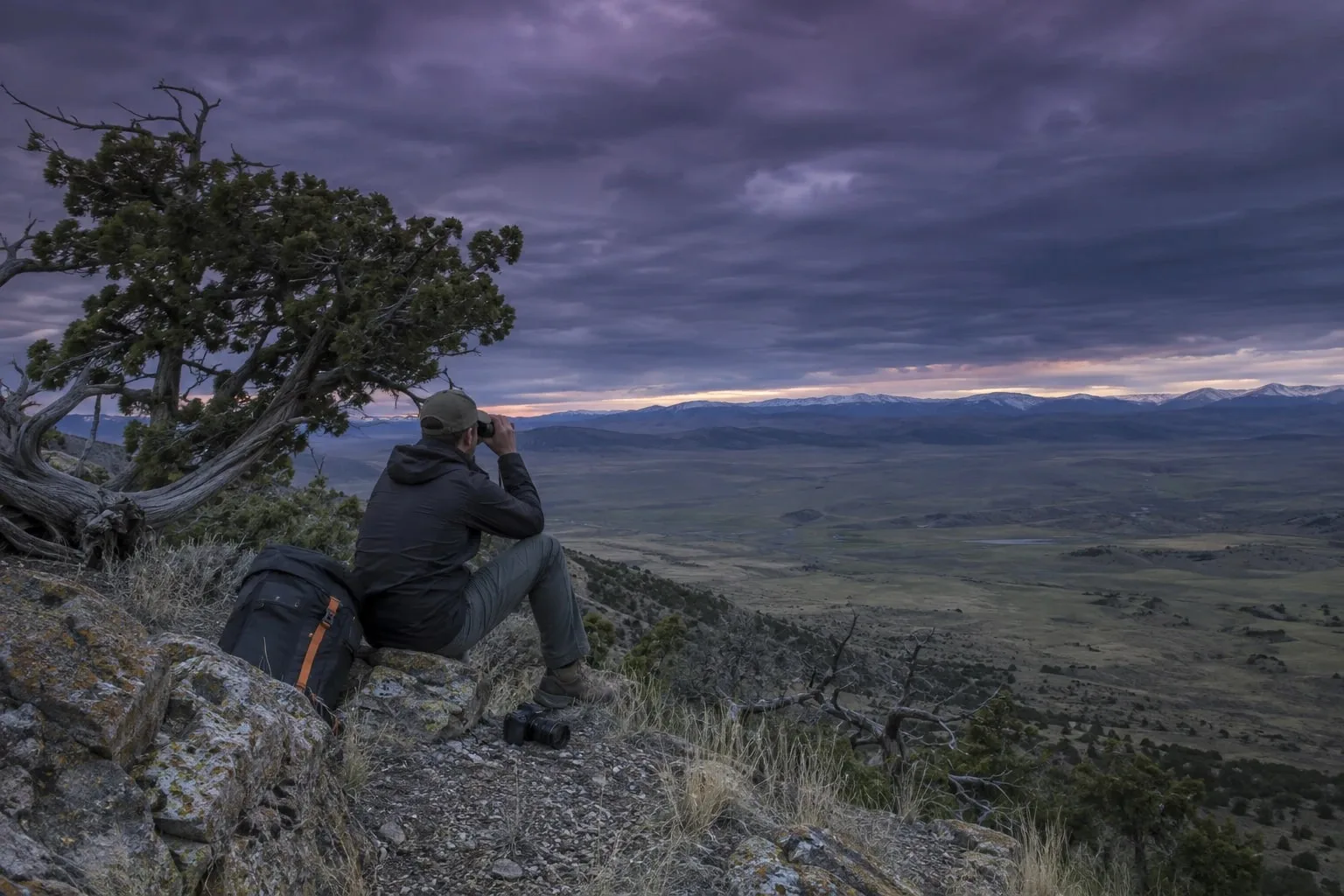
He never looks at the animal
Rowan Teale shot weddings for eleven years and then stopped. He works one catchment with four dogs now, and the dogs are the instrument: he watches them, and they tell him where the picture is.
- Subject
- Australia, Field work, Dogs
Rowan Teale photographed weddings in Perth for eleven years. He stopped counting somewhere past three hundred of them. He was good at it: booked out eighteen months ahead, and the line that kept turning up in what clients wrote about him afterwards was always some version of the same thing, which is that he was already standing in the right place before anything happened.
That sentence is worth holding on to, because it is the only part of the job he kept. A wedding is the most rehearsed event most people will ever stage. There is an order of service, a seating plan, a run sheet and a shot list, and after a few dozen of them you are not reacting to anything any more. You know the groom's mother will reach for her bag about ninety seconds before the vows, so you are already standing where her face will be lit when she does it. Eleven years of that is eleven years spent training an anticipation that only works in places where the future has been written down in advance.
In the spring of 2023 he sold the lighting, kept two bodies and three lenses, and moved onto one catchment about forty kilometres end to end. Floodplain swamp and paperbark in the wet months, open ridge and dry grass in the months after. He has photographed nothing else since. No commissions, no assignments, and not one frame of a human being who asked to be in the picture.
The first eleven months produced forty-one photographs he was willing to keep. Everything he knew was useless out there, because nothing in a swamp has a run sheet. For most of a year he was arriving two seconds late for the whole of his new life.
What fixed it was not patience, and it was not a longer lens. It was the dogs.
There are four of them and they are not along for company. Ruff, the old cream one, works smell carried off water and nothing else; when something has crossed upstream he walks to the bank and stands there and will not be moved. Mop, black and shaggy, sits up for movement at distance and has never once been interested in anything with wings. Tilly, the collie, flattens to the ground for whatever is overhead, which is how Teale knows about a raptor before he can see one. Bram cares only about what is under the ground, which sounds useless until the question is where the burrows are. Each dog is wrong in a different direction, and that is the entire value of them.
So he does not watch the country. He watches four animals who are each tuned to one narrow band of it, and he reads them the way you read a row of needles. One dog lifting means nothing at all. Three lifting in the same second and pointing the same way is the only alarm he trusts, and he says he has trained himself to move on that before his own eyes have found anything to look at. The dogs hand him back the thing the weddings gave him, which is a reliable two seconds of warning.
Then there is the other half of the old trade, and it is the stranger half. The picture at a wedding is never the kiss. It is the face of the person watching the kiss. Every photographer who has done the work knows this, and most of them are faintly ashamed of knowing it, because said out loud it sounds like a trick. Teale runs it on a floodplain now. A good share of his frames do not contain the animal at all. They contain four dogs who have all gone still at once, or flattened grass where something was lying twenty minutes earlier, or a ridge line that something has just walked off the back of. The subject is outside the edge of the picture and the picture is the reaction to it.
It is a slow and inefficient way to work and he does not pretend otherwise. A hide and a six hundred millimetre lens would put more species on the card in a week than he manages in a season. It also keeps him out of most of the competitions, which want the animal in the frame and have no category for the two seconds before it. Three years in he is not well known, and that does not look like a problem he is working on.
What he does is not photography with dogs. It is photography through them. He is still doing the only thing he ever properly learned, which is to stand where the reaction is going to be. The difference is that the reaction now belongs to an animal with no idea it is being photographed, and the thing it is reacting to is usually somewhere off the edge of the picture.
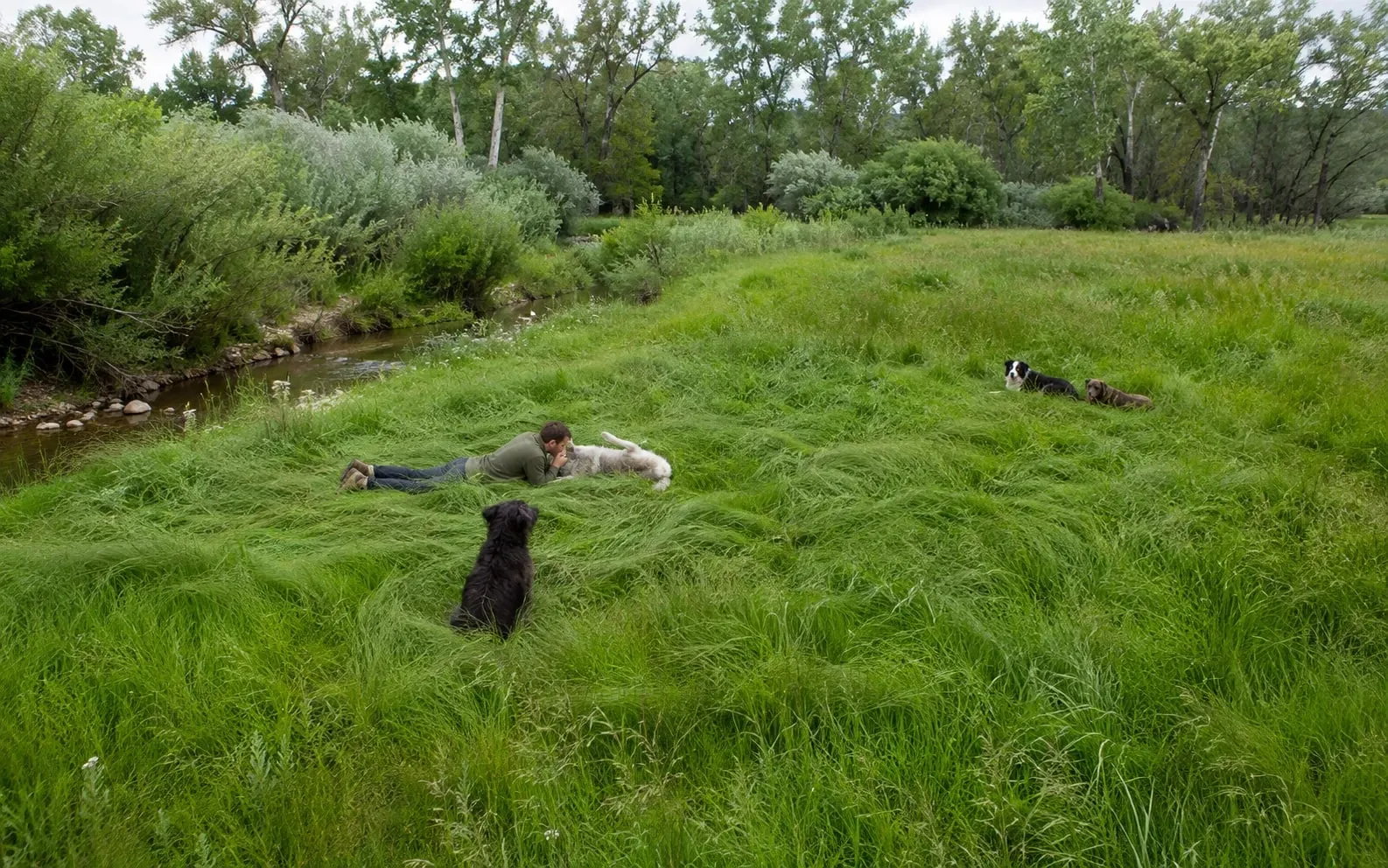
The dogs are the instrument, not the company. Four of them, each tuned to a different band of the same country: smell carried off water, movement at distance, anything overhead, anything under the ground. 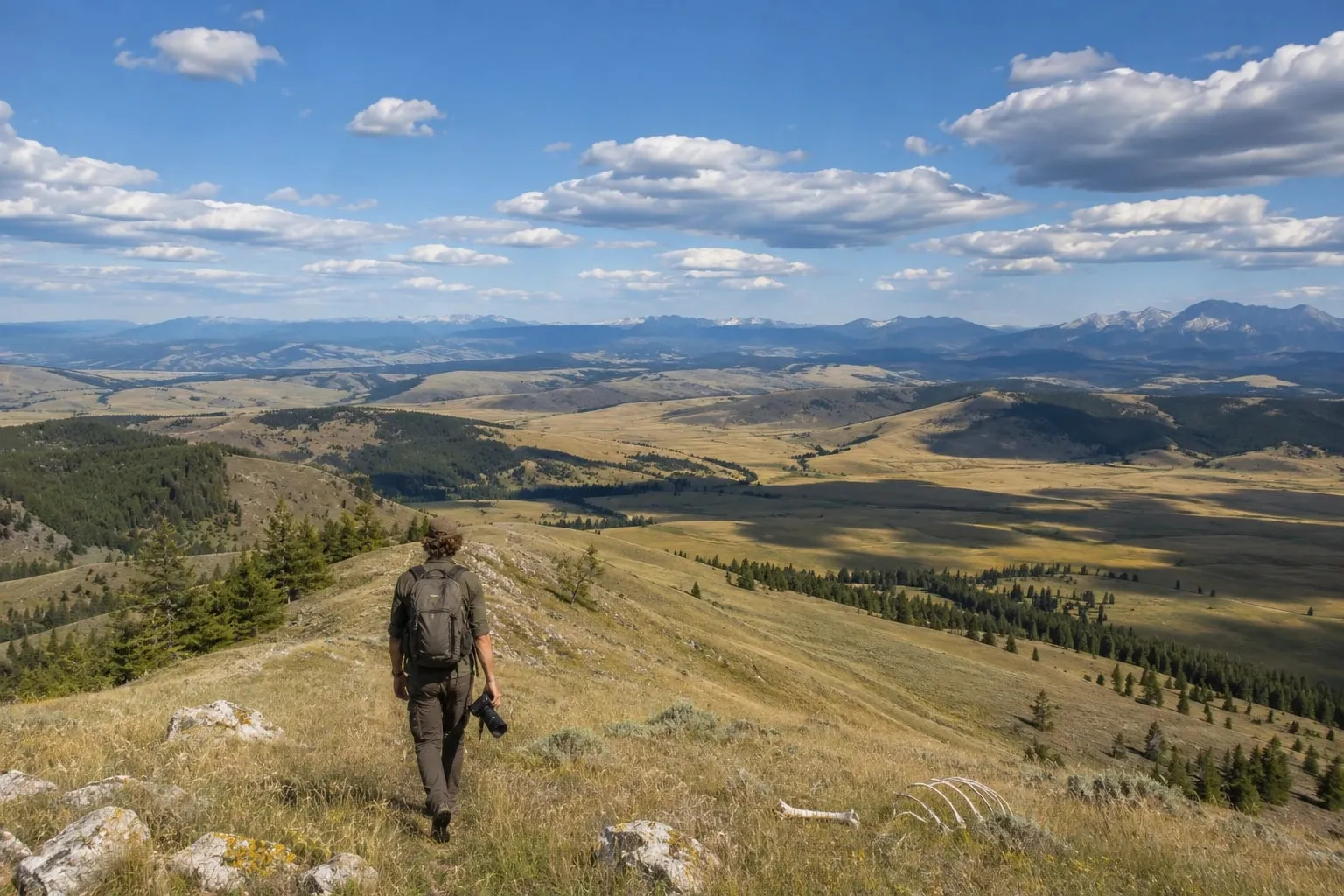
The high ground in the dry months. He walks the same forty kilometres over and over, which is the only thing that makes the dogs worth reading: their reactions are a measurement against a baseline he already carries.