What this form is for
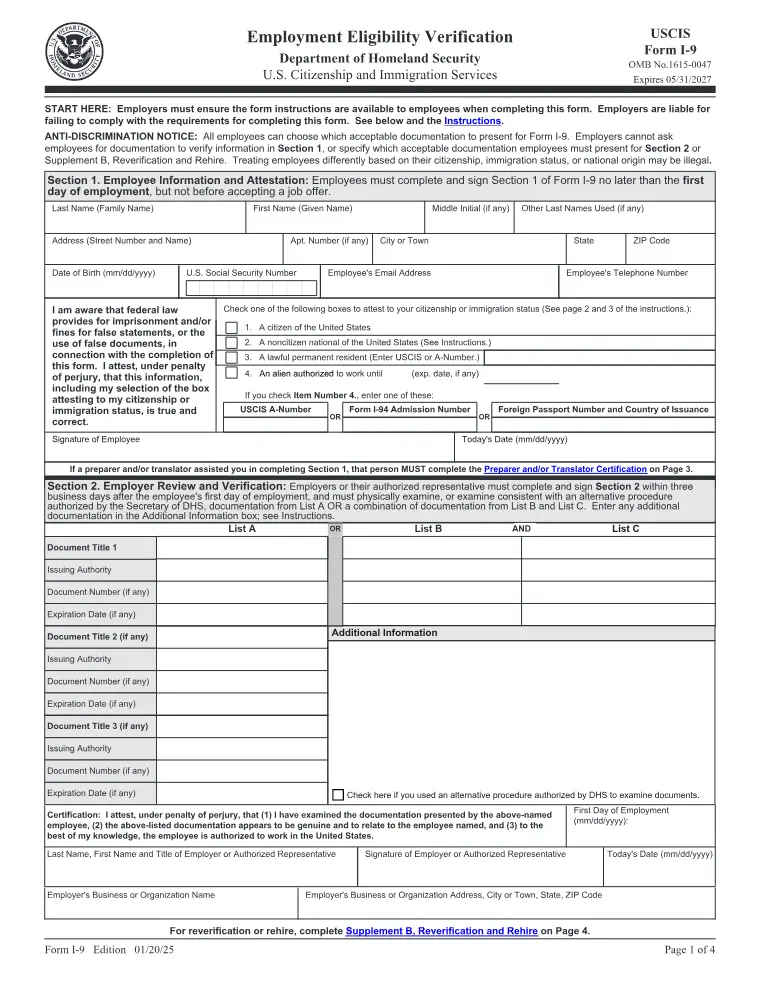
Employment Eligibility Verification (I-9). Records that an employer has checked a new hire’s identity and their right to work in the United States. It is never sent anywhere — the employer keeps it and produces it if inspected.
Deadline. Section 1 by the employee on or before their first day. Section 2 by the employer within three business days of that day.
Who needs it
Every employer, for every employee hired in the US, citizens included.
When you do not need it
It is not for independent contractors, and not for employees hired before November 1986.
How to fill it in
Open the file in the Quire editor. Existing form fields become editable straight away; on a flat scan you can drop your own text boxes, checkboxes and dates exactly where they belong. Sign it with the Sign tool — draw, type or upload your signature — then export.
Everything happens in your browser. A tax or immigration form carries enough personal information that it has no business sitting on somebody else's server, and here it never does.
What goes wrong
- You may not tell an employee which documents to produce. Naming a specific document is document abuse, and it is what most I-9 penalties are actually for.
- Retention runs to three years after the hire date or one year after employment ends, whichever is later.
- Only the edition current on the date of hire may be used — the form is revised and old editions are rejected.
Where it goes
Submit it to the address or online portal named in the agency’s current instructions. Sending an application to a superseded address is one of the most common causes of delay.
This page explains the document and helps you fill it in. It is not legal or tax advice, and it is not affiliated with any government agency.