What this form is for
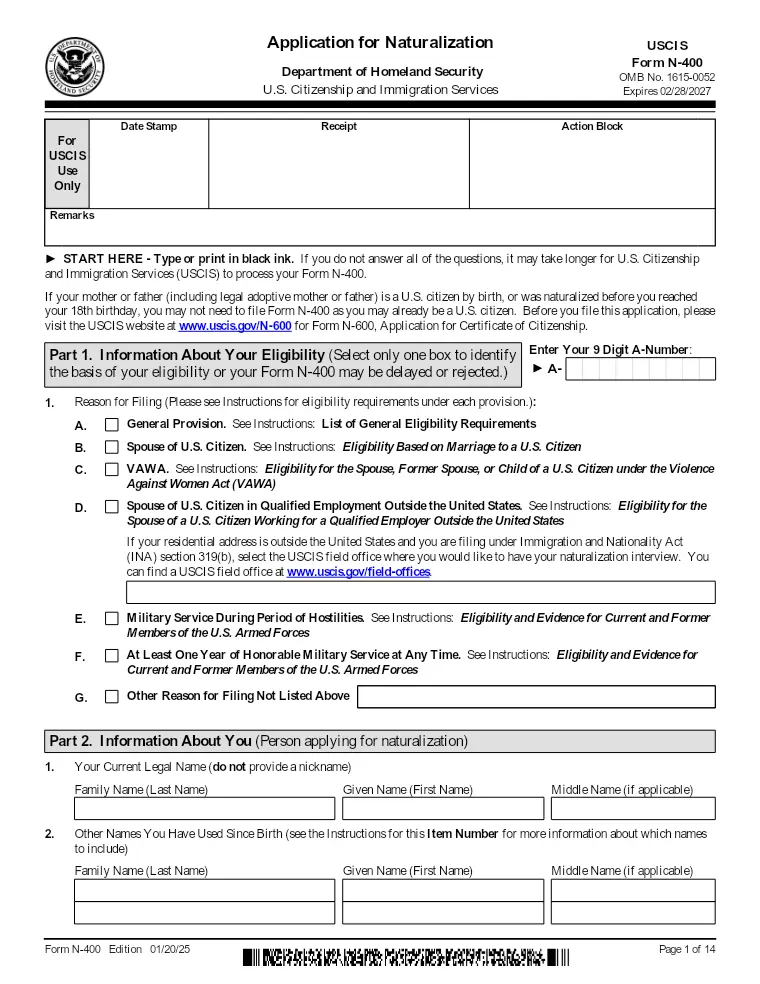
Application for Naturalization (N-400). The application for naturalisation as a US citizen.
Who needs it
Permanent residents who meet the residence, physical-presence and good-moral-character requirements.
Before you start
Have these to hand — stopping halfway to look one of them up is how a ten-minute job becomes an evening.
- Every trip outside the US since becoming a resident, with dates
- Addresses and employers for the last five years
- Details of any arrest or citation, however minor and however long ago
How to fill it in
Open the file in the Quire editor. Existing form fields become editable straight away; on a flat scan you can drop your own text boxes, checkboxes and dates exactly where they belong. Sign it with the Sign tool — draw, type or upload your signature — then export.
Everything happens in your browser. A tax or immigration form carries enough personal information that it has no business sitting on somebody else's server, and here it never does.
What goes wrong
- You may generally file 90 days before completing the residence requirement, but not a day earlier.
- Disclose every arrest, including ones that were dismissed or expunged. Omissions are found and they are treated far more seriously than the underlying incident.
Where it goes
Submit it to the address or online portal named in the agency’s current instructions. Sending an application to a superseded address is one of the most common causes of delay.
This page explains the document and helps you fill it in. It is not legal or tax advice, and it is not affiliated with any government agency.